- Email kabul@aabrar.org.af
- Phone +93(0) 20 223 1250
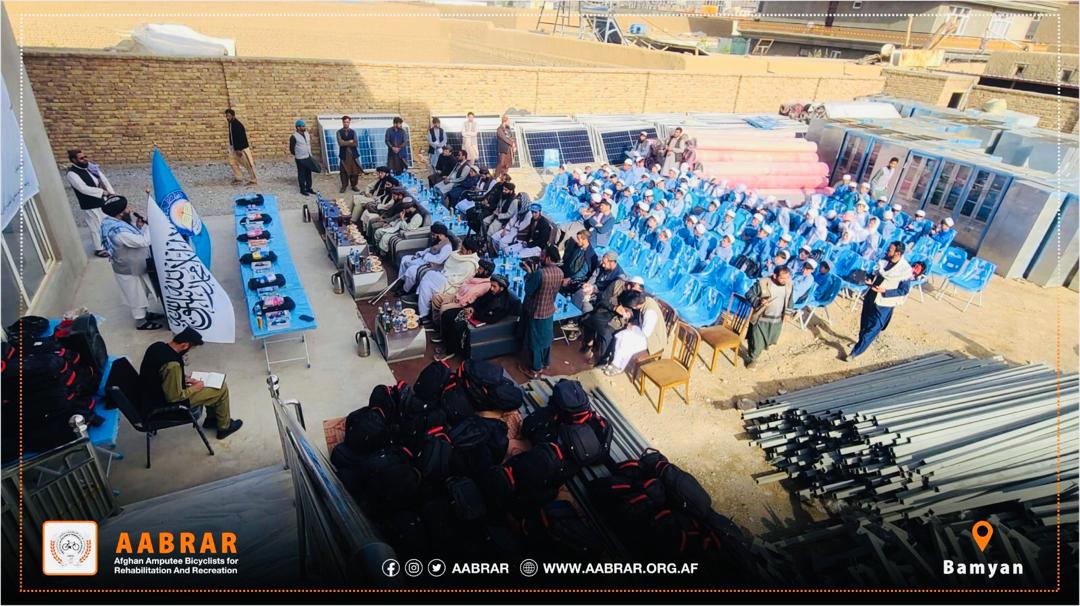
The B-AQBE project, implemented by AABRAR in partnership with the International Rescue Committee (IRC), was completed across Bamyan, Nangarhar, and Nuristan provinces. The project aimed to improve access to quality education for students and teachers through the distribution of learning materials, teacher training, establishment of reading corners and WASH facilities, and community engagement.
Teaching and Learning Materials Distribution: Total targets were 101,662 student kits, 4,591 teacher kits, and 3,930 classroom kits across targeted schools. Kits were distributed to students, teachers, and classrooms to support teaching and learning.
Reading/Study Corners: A total of 262 Reading/Study Corners were planned for establishment and handover to school management and DED/PED. Each corner was to be equipped with tables, chairs, cabinets, and carpets to create child-friendly reading spaces.
WASH Facilities: 262 schools were targeted to receive WASH materials and complete installation, including water supply pipes, taps, water tanks, and handwashing stations to improve access to safe water and hygiene.
Teacher Training and Teacher Learning Circles (TLC): The 12-day Teacher Training Programme targeted 2,112 teachers. Four rounds of Teacher Learning Circles were planned to reinforce training content and strengthen peer-to-peer learning among teachers.
Safeguarding and Child Protection Training: 786 education personnel were targeted for one-day training on safeguarding and child protection to strengthen safe school practices.
Community Awareness and ACR Social Mobilization: Community awareness sessions targeted 7,860 participants, while ACR social mobilization targeted 2,640 participants to promote school enrolment and community support for education.
Remedial Classes: 6,200 learners were targeted for remedial classes using the Teaching at the Right Level (TaRL) approach, with 310 remedial teachers engaged to deliver sessions. The endline ASER assessment was completed and results shared with IRC.
The project was closely monitored by IRC, AABRAR, Third-Party Monitoring (TPM), and education authorities, including a high-level visit by the Ministry of Education. Regular weekly coordination meetings and orientation sessions with IRC — including Post-Distribution Monitoring training, safeguarding refresher training, and TLC quality improvement meetings — strengthened implementation quality.
The B-AQBE project has made a lasting contribution to education in Bamyan, Nangarhar, and Nuristan provinces. AABRAR extends its sincere appreciation to IRC, PED, DED, school management, and community stakeholders for their invaluable support and collaboration. AABRAR looks forward to continuing and strengthening these partnerships in future initiatives to further improve access to quality education for children and communities across Afghanistan.
Copyright 2026 AABRAR NGO. Powered By AryanIct
